Macaron vs Macaroon: What Is the Difference? | Macarooner
One letter separates them, but a macaron and a macaroon are entirely different pastries. Here is what each one is, how to pronounce them, and why the difference matters when the box is going to a client.
One letter, two different pastries
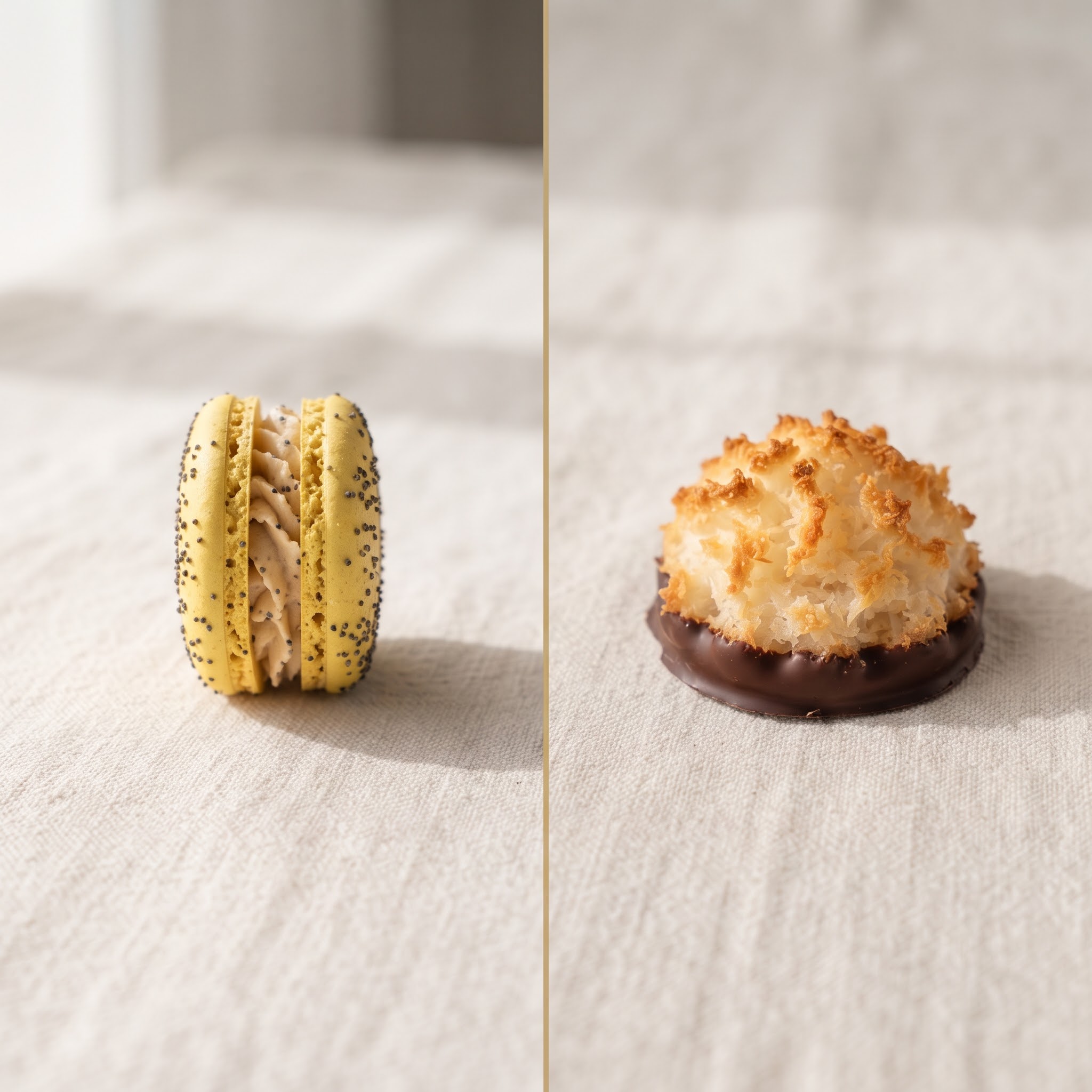
A macaron is an almond-meringue sandwich. A macaroon is a coconut mound. They share four letters and almost nothing else.
The mix-up is everywhere. It appears in search bars, on café menus, and on a surprising share of the corporate gift enquiries we receive at Macarooner. Someone wants to send their best clients something elegant and asks for macaroons. They mean macarons.
This guide settles it: what each one is, where the names came from, how to say them, and why the distinction matters when the box is going to a client.
What is a macaron?
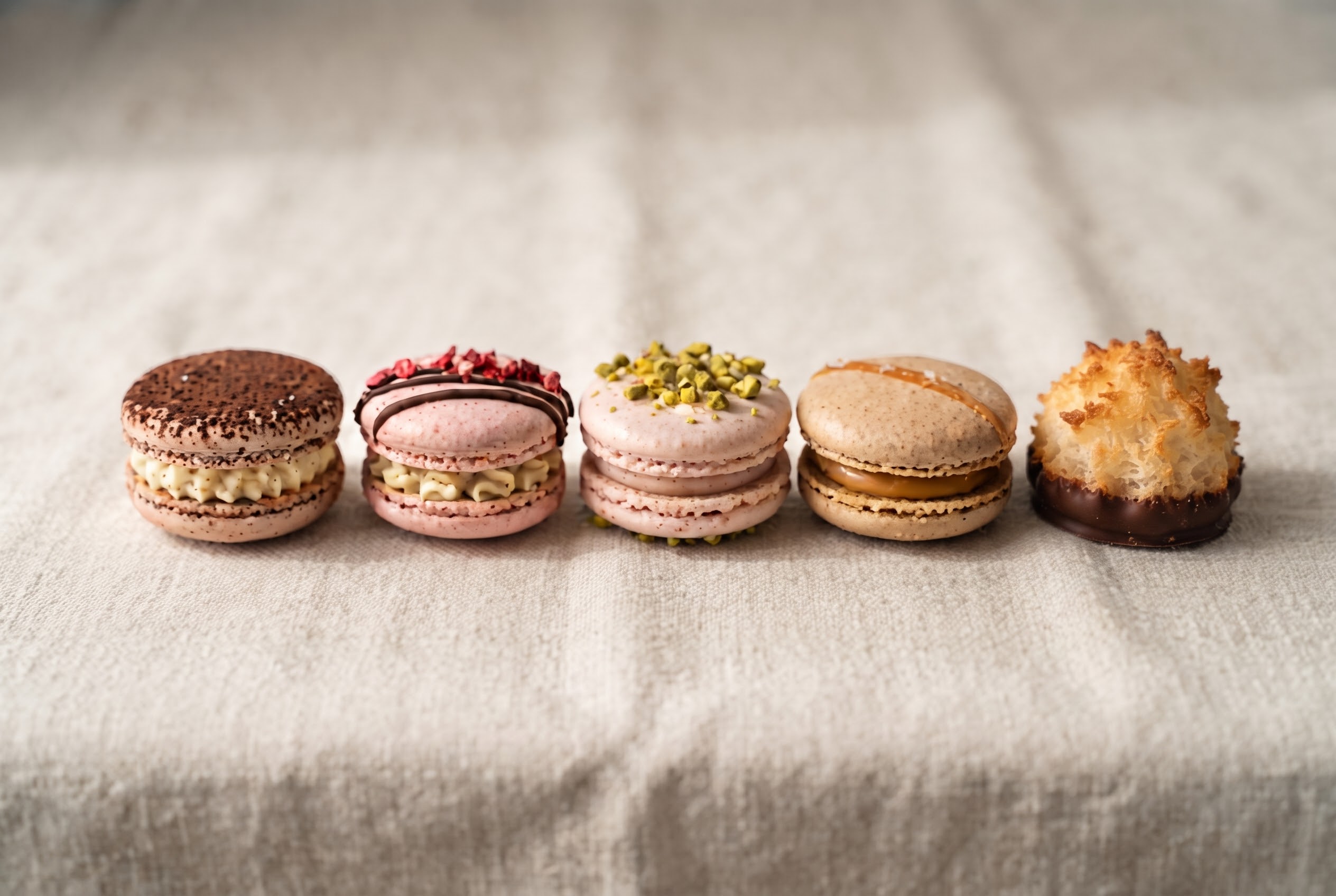
A macaron is two delicate almond-meringue shells sandwiched around a filling. The shells are made from ground almonds, icing sugar, egg white and caster sugar, whipped into a meringue and folded until the batter flows like lava.
A well-made shell has three signatures: a smooth, slightly domed top; a ruffled base known as the foot; and a thin crisp skin that gives way to a soft, chewy interior. The filling is where the flavour lives: ganache, buttercream, caramel or fruit confit.
Macarons are notoriously unforgiving. Over-whip the meringue, fold ten seconds too long, or bake on a humid afternoon, and the batch is lost. That difficulty is part of why they sit at the top of the pastry world, and why a box of them reads as a considered gift rather than a sweet treat.
At Macarooner we make them by hand in Kent and ship them UK-wide in luxury ribbon gift boxes, many of them printed with a client's logo or a personal message.
What is a macaroon?
A macaroon is a dense, chewy mound of shredded coconut bound with egg white and sugar, often with condensed milk, and frequently dipped in dark chocolate. It is baked until the outside turns golden and the inside stays soft.
Macaroons are rustic and generous. They are a home-baking staple, a Passover favourite because they contain no flour, and a reliable crowd-pleaser at a bake sale. What they are not is a refined patisserie item, and nobody has ever hand-painted gold leaf onto one.
Macaron vs macaroon at a glance
Macaron Macaroon Main ingredient Ground almonds Shredded coconut Structure Two meringue shells, filled Single baked mound Texture Crisp skin, soft chewy centre Dense, moist, chewy throughout Appearance Smooth dome, ruffled foot, any colour Craggy, golden, often chocolate-dipped Flavour comes from The filling: ganache, caramel, confit The coconut itself Difficulty High; humidity-sensitive Low; forgiving Pronunciation mac-a-ROHN mac-a-ROON Gift positioning Luxury, corporate, weddings Home baking, casual
Why they share a name
Both words descend from the same root, maccarone, an old word for a paste of ground almonds, sugar and egg white. The earliest versions were simple almond biscuits, and the name travelled with the recipe.
Over the centuries the recipe split. One line was refined by patissiers into a smooth meringue shell, and by the early twentieth century two shells were being sandwiched around a ganache. That is the macaron.
The other line swapped almonds for cheaper, longer-lasting shredded coconut during the 1800s. It kept the old name, picked up an extra letter, and became the macaroon.
How to pronounce them
Macaron is mac-a-ROHN, with a soft, almost silent n at the end. Macaroon is mac-a-ROON, rhyming with moon.
The easy way to remember it: the extra o in macaroon is the coconut. Two o's, one coconut. One o, one patisserie.
Why the difference matters when you are gifting
When a gift goes to a client, the detail is the message. A box of handmade macarons says you chose something made in small batches, to exacting standards, and presented with care. That is the signal a corporate gift, a wedding favour or a launch-event box needs to send.
It also matters in the ordering. Ask a bakery for 200 macaroons for a client Christmas drop and you may receive coconut mounds in a cardboard tray. Ask for macarons and you get the shells, the ribbon box and, if you want it, your logo printed on every one.
At Macarooner we make macarons. Nothing else. Every box is made by hand in Kent, delivered across the UK, and can be personalised with your branding, a message or a bespoke art-box design. Our corporate gifting team works with offices, agencies and event planners on orders from a single luxury box to several hundred branded ones.
Explore corporate and branded macarons or email bite@macarooner.com to discuss a Christmas order. December slots are already booking.
Frequently asked questions
Is a macaron the same as a macaroon?
No. A macaron is an almond-meringue sandwich with a filling. A macaroon is a coconut mound. Different ingredients, textures and methods.
Which is harder to make?
The macaron, by a distance. It depends on a precisely whipped meringue, careful folding and a dry kitchen. A macaroon is mixed and baked.
Are macarons gluten free?
Most classic flavours contain no wheat, but some fillings do, and all macarons contain almonds, egg, milk and often soya. Always check the allergen sheet before ordering for an event.
How long do macarons keep?
Around five days refrigerated, and they taste best after resting for a day so the shell softens into the filling. We ship in insulated packaging so they arrive at their best.
Can macarons be branded?
Yes. Macarooner prints logos, names and messages directly onto the shells, and designs bespoke art boxes for launches and corporate gifting.